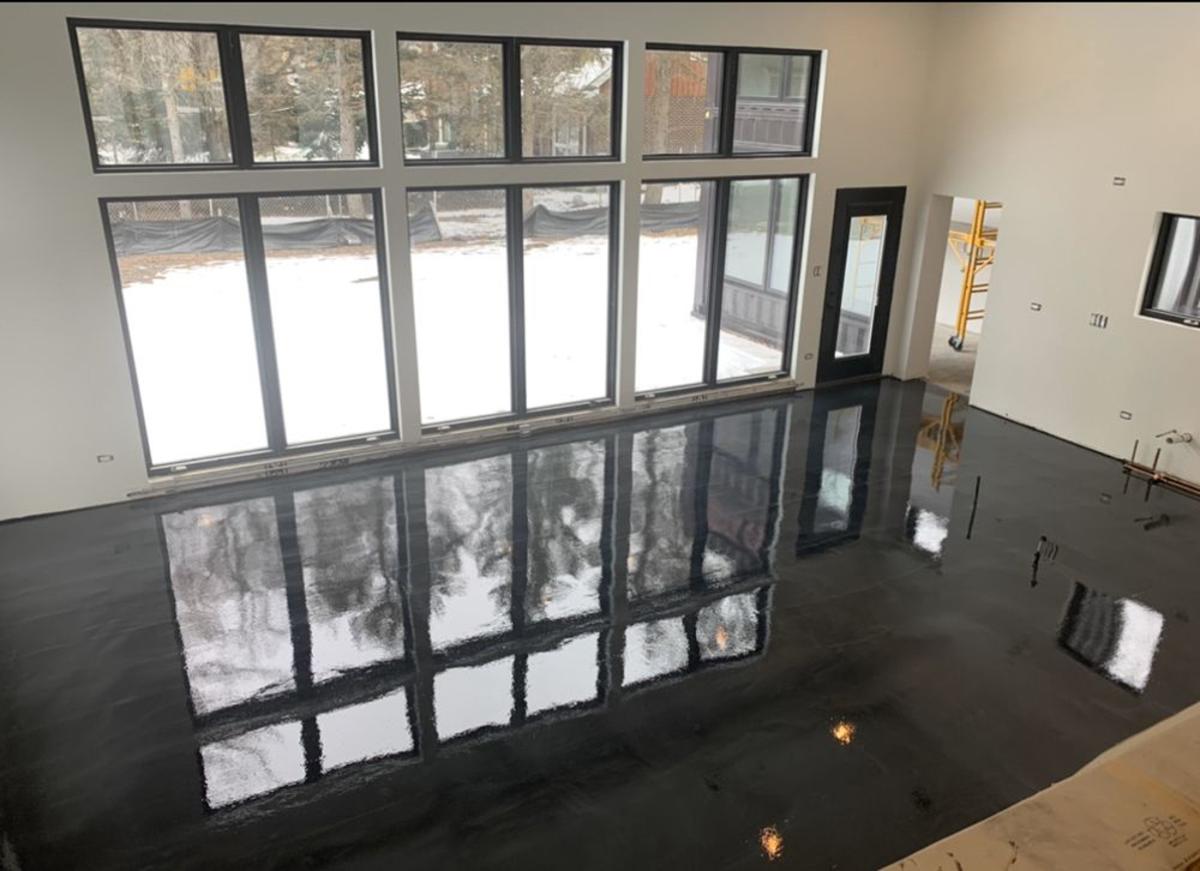
The price of metallic epoxy flooring in Illinois typically ranges from $7 to $14 per square foot installed. The exact figure depends on the floor size, surface condition, design complexity, and coating system. For a 400–600 sq ft space, most projects fall between $2,800 and $8,400. A1 Concrete Coatings installs metallic epoxy floors for homeowners and businesses across the Chicago suburbs.
A homeowner in Arlington Heights called us after getting three quotes for a metallic epoxy floor in his 480-square-foot workshop garage. The quotes ranged from $3,400 to $7,100. Same square footage, same “metallic epoxy” description on every proposal. What was different? Surface preparation, material grade, and whether anyone planned to diamond-grind the floor first. He had no way to evaluate the gap until someone explained what those line items actually meant. That’s where most metallic epoxy projects go sideways.
What Drives Metallic Epoxy Flooring Price?
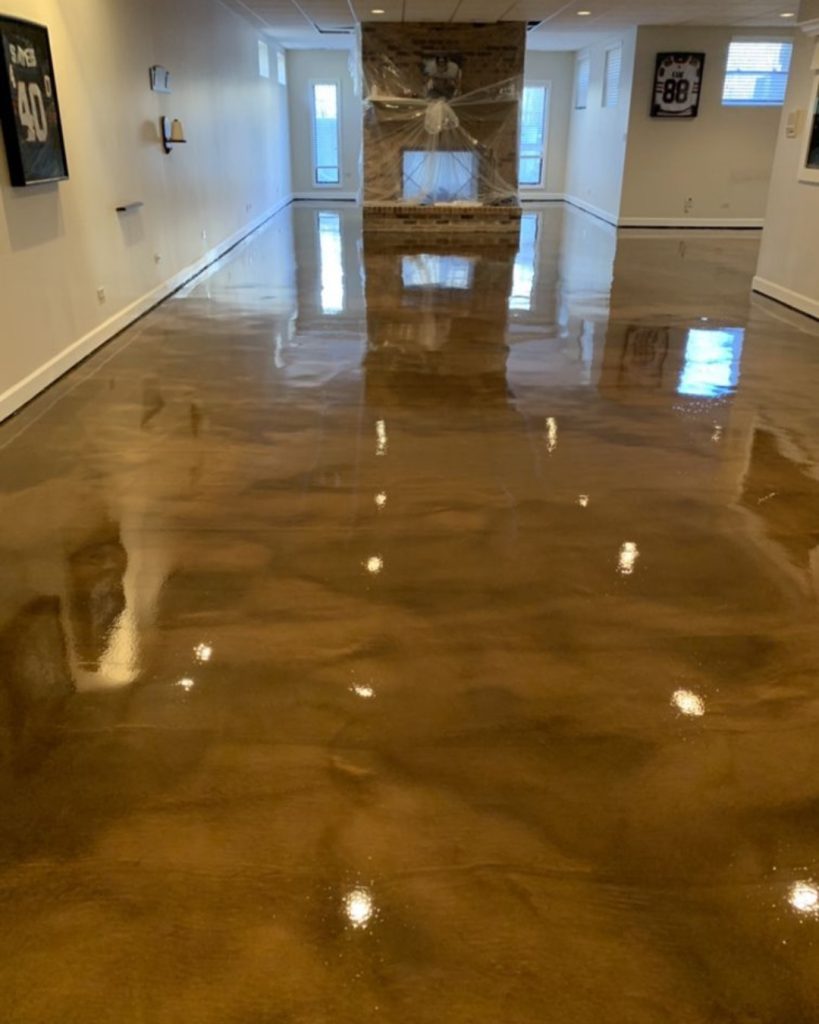
Metallic epoxy costs more per square foot than standard flake systems because the installation is more labor-intensive. It’s a custom visual effect created by manipulating pigmented resin while it’s still wet. The installer controls how the metallic particles swirl and pool, and there’s no correcting it once the coat begins to set.
The main cost drivers for Illinois homeowners and commercial clients include:
- Floor size: Larger spaces lower the per-square-foot cost, but setup costs apply regardless
- Surface condition: Concrete with oil stains, spalling, or active moisture requires mechanical grinding and possibly crack repair
- Design complexity: Single-color metallic pours cost less than multi-tone or full custom 3D effects
- Coating system: A commercial-grade system uses a primer, pigmented epoxy base, and polyaspartic topcoat (three layers with separate material and labor costs)
- Garage vs. commercial: Showrooms and lobbies often need higher-build systems and additional prep for prior coatings or contamination
What’s non-negotiable is the prep. Grinding removes the weak surface layer built up from freeze-thaw exposure and road salt tracked in from Northern Illinois driveways. A metallic epoxy applied over unprepped concrete is far more likely to delaminate, often within the first year or two.
What a Professional Metallic Epoxy Install Includes
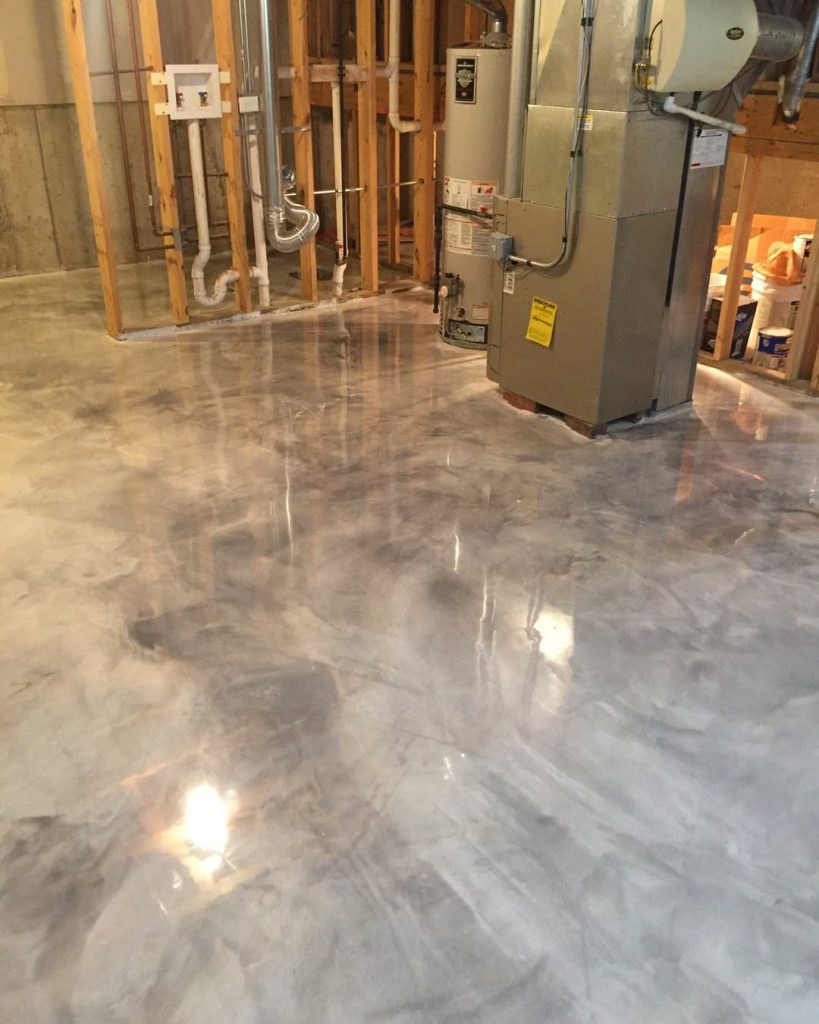
A complete metallic epoxy floor installation from A1 Concrete Coatings covers the full process from surface prep to final topcoat. Here’s what each stage involves:
Surface Preparation
Diamond grinding strips the top concrete layer to open the pores and remove contamination, creating the mechanical bond that keeps the coating from peeling.
Primer Coat
A penetrating epoxy primer seals the slab and blocks moisture vapor, a critical component in older Chicagoland homes where slabs have been absorbing ground moisture for decades.
Metallic Epoxy Base Coat
The pigmented layer is manipulated by hand to create the swirl and depth effect. A1 uses commercial-grade materials from Sherwin Williams and SurfKoat, the same product line applied to industrial and commercial floors.
Polyaspartic Topcoat
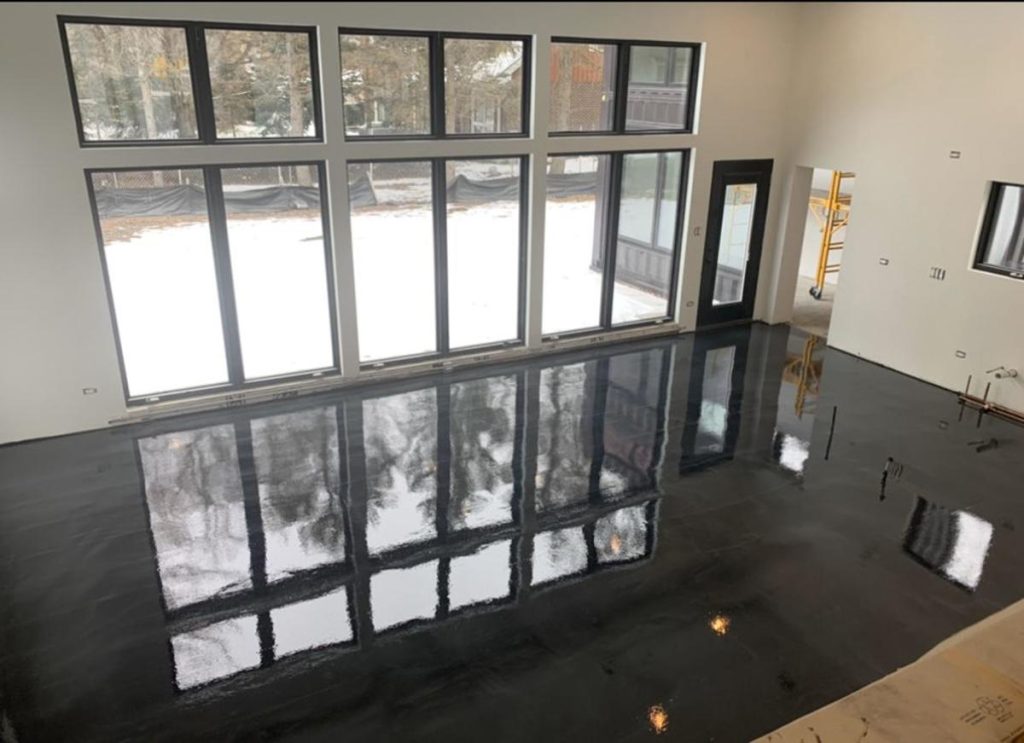
A UV-stable polyaspartic topcoat seals the metallic layer, adds scratch resistance, and produces the glass-like finish these floors are known for. The topcoat also determines the amount of sheen, from satin to high-gloss. The full process is typically finished in one day.
How Illinois Winters Affect Metallic Epoxy Performance
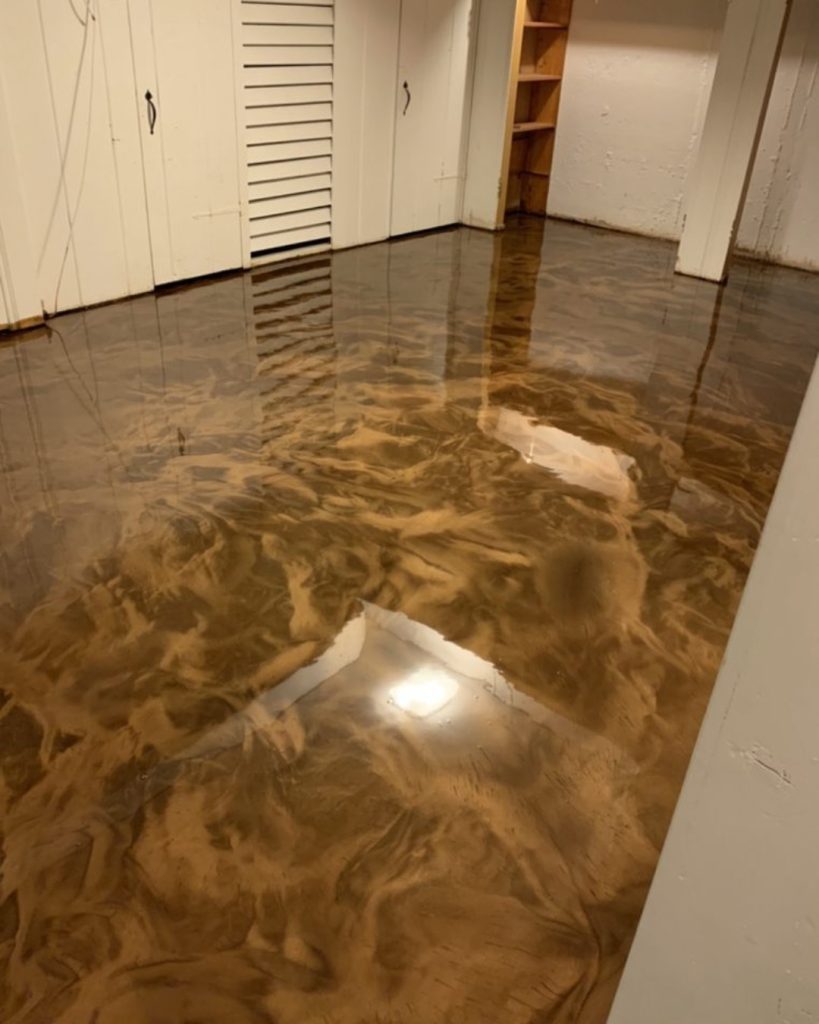
Northern Illinois experiences dozens of freeze-thaw cycles per winter. In suburbs like Des Plaines and Elk Grove Village, garage floors experience dramatic swings: well-below-freezing nights followed by significantly warmer afternoons in the same week during March and April.
Standard epoxy is rigid and expands at a different rate than concrete. That differential stress causes cracking or delamination over time in this climate. A metallic epoxy system with a flexible polyaspartic topcoat is better equipped to handle seasonal movement and maintain adhesion through the full annual cycle.
Homeowners considering metallic epoxy floors in Des Plaines and nearby communities should know that the composition of the coating system—not just the visual effect—determines how the floor performs five years from now.
Frequently Asked Questions
How long does metallic epoxy flooring last in Illinois?
A professionally installed metallic epoxy system with a polyaspartic topcoat can carry manufacturer-rated lifespans of 10 to 20 years under normal residential use. Surface preparation quality and coating thickness are the biggest factors affecting longevity. A1 Concrete Coatings backs installations with a lifetime product warranty and a one-year workmanship warranty.
Is metallic epoxy flooring slippery when wet?
Metallic epoxy can be slippery on a high-gloss finish. A non-slip additive mixed into the topcoat increases traction in garages, basements, or commercial spaces. Request this option from your installer before the topcoat is applied. It can’t be added after the fact.
Can metallic epoxy be installed in a cold Illinois garage?
Yes, A1 Concrete Coatings uses polyaspartic topcoat systems that cure in low-temperatures, unlike traditional epoxy products that require temperatures above 50 degrees Fahrenheit to cure. Metallic epoxy can be installed year-round in Northern Illinois, including during late fall and early spring when overnight lows still drop below freezing.
Get a Straight Answer on Your Metallic Epoxy Quote
Metallic epoxy earns its price when installed correctly: proper prep, commercial-grade materials, and a topcoat built for Midwest conditions. Cutting corners on any of those layers changes the outcome, not just the numbers on your invoice.
A1 Concrete Coatings gives clients across Northern Illinois a real price estimate on the first call. No in-home visit required before you get a number. Contact A1 Concrete Coatings today to get your metallic epoxy quote.