

Garage floor coatings can be slippery when wet, especially when the finished surface is smooth. Whether a coated garage floor stays safe to walk on during Chicago’s wet winters and rainy spring thaws depends less on the coating’s name and more on its surface texture, what gets tracked onto it, the shoes being worn, and how it’s cleaned. Understanding these factors helps homeowners ask the right questions before choosing a finish for a garage, basement, or patio.
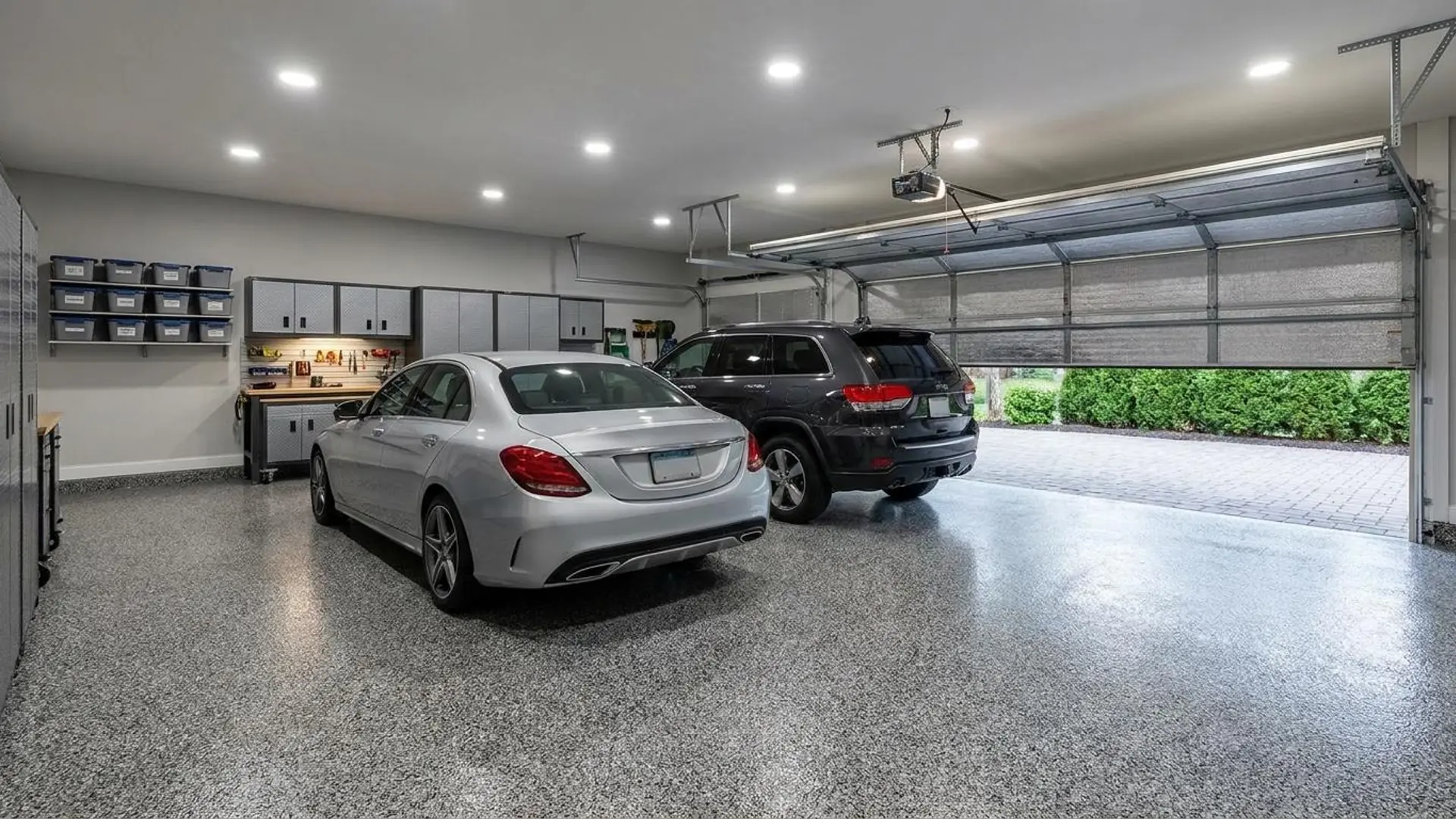
Texture, Not the Coating Name, Drives Traction
A common assumption is that one coating type is automatically safer underfoot than another. In reality, flooring surface, contamination, footwear, cleaning habits, and how the space is used all interact to affect slip risk. A coating’s chemistry label alone doesn’t establish how safe the finished floor will feel in wet conditions (HSE, Assessing the Slip Resistance of Flooring).
That means even a small amount of water, oil, or other contamination can create a slip problem on a smooth floor, regardless of how durable or chemical-resistant the underlying coating is. A floor can resist stains and hot-tire pickup extremely well and still feel slick the moment it’s wet if the surface itself is glossy and flat.
How Textured Finishes Create Grip
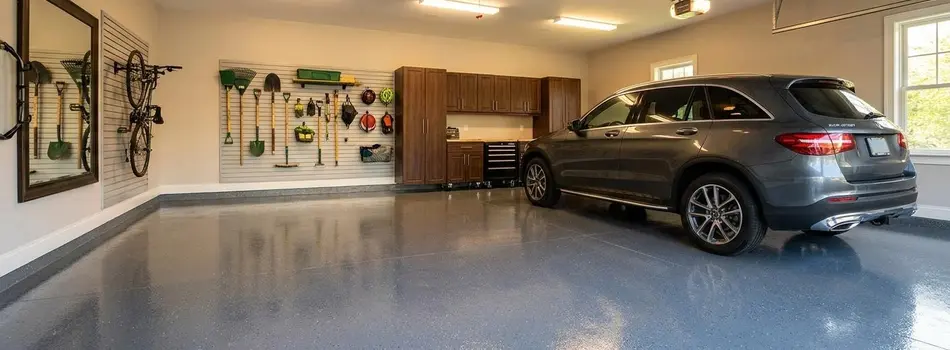
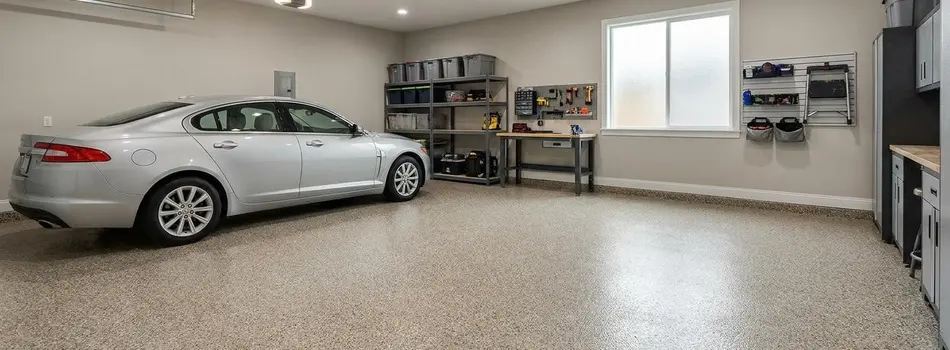
Surface texture plays a major role in how much traction a coated floor provides, and different systems create that texture in different ways:
- 1-Day Flake Flooring: Vinyl flakes are broadcast into a polyurea or polyaspartic base coat, producing a textured, slip-resistant finish rather than a flat, glass-smooth surface.
- Quartz flooring: Fine quartz aggregate is broadcast into the base coat, and on-site test samples let homeowners check texture and color in person before committing to a full installation, rather than relying on photos alone.
Seeing and touching a physical sample is a useful way to judge how a finish will feel underfoot, since a photo can’t convey texture. However, a sample’s feel alone doesn’t establish its measured wet slip resistance.
It’s worth distinguishing decorative flakes from the actual exposed texture a shoe or tire will contact once the full system is installed.
The Chicagoland Winter Scenario Worth Planning For
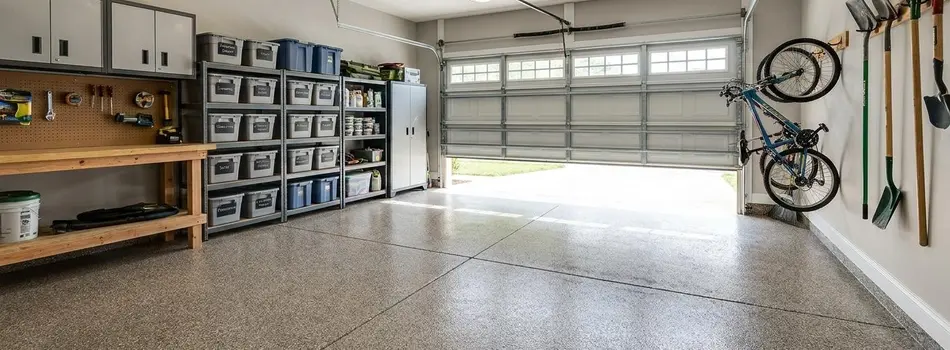
Local winters add a predictable form of contamination that’s worth thinking through ahead of time: salt-bearing meltwater dripping from wheel wells as vehicles sit in the garage. This kind of residue can collect in the same spot every day, right where someone steps getting in and out of a car.
Two practical questions help homeowners plan for this:
- Where does a vehicle typically drip after driving on salted roads, and does that spot fall along the main walking path?
- What’s the walking route between the parked car and the house entrance, and does it cross that drip zone?
Thinking through these everyday patterns, rather than assuming any coating automatically handles road salt residue, makes it easier to decide where added texture matters most.
Questions Worth Asking Before Choosing a Finish
Since a coating’s name or chemistry doesn’t guarantee wet-weather performance, it helps to ask more specific questions:
- Does available slip test information describe the installed, finished surface, or just the raw coating material? A dry-only result, or a rating that doesn’t specify test conditions, shouldn’t be treated as proof of wet performance.
- What creates the actual grip on the finished floor, the broadcast aggregate itself or a separate traction additive? Purpose-made anti-skid additives, such as the aluminum oxide additive documented by Rust-Oleum for compatible coatings and typically applied in the final coat of a multi-coat system, are a distinct traction measure from decorative appearance (Rust-Oleum, Anti-Skid Additive). This is a general industry concept worth asking about, not a claim about any specific A1 product mix.
- Is there a sample available to touch and compare before the full floor is installed?
The Cleaning Trade-Off
More texture can improve grip, but it may also require more attention during cleaning. Textured surfaces can be harder to mop thoroughly than smooth finishes, so it’s important to remove dirt and cleaning solution rather than allowing residue to remain on the floor.
The UK Health and Safety Executive recommends selecting a cleaning method appropriate for the flooring surface, using the correct amount of cleaning product, and removing spills promptly (HSE, Floor Cleaning and Contamination).
Choosing a finish is a balance between traction and how much maintenance effort feels reasonable.
Cleaning itself can also introduce a temporary hazard. Even a well-wrung mop can leave moisture behind that creates a slip risk on a smooth surface. Removing spills promptly, using the correct amount of cleaner, and allowing the floor to dry fully are simple habits that reduce that risk, whether the floor is coated or bare concrete.
Bringing It Together
A garage floor coating can improve traction in wet, snowy, or salty conditions, but that improvement comes from the texture of the finished surface, not from the coating’s name alone. No coating is completely slip-proof under every condition.
Asking about broadcast aggregate, sample textures, applicable slip-test information, and realistic cleaning expectations gives homeowners a much clearer picture than a product label by itself.
Talk to A1 Concrete Coatings About Your Garage Floor
If you’re weighing garage floor coating options for a home in Elk Grove Village, the greater Chicago metro area, or Southern Wisconsin, A1 Concrete Coatings can walk you through available texture samples and finish choices.
Call (866) 212-6284 to ask about scheduling a look at your garage floor and comparing finish options for your space.

Under the direction of founder Luis Contreras, A1 Concrete Coatings provides various types of concrete coatings, including flake floors, solid concrete dyes, polished concrete floors, metallic epoxy floors, quartz epoxy floors, and urethane cement-coated floors. Louis and Angie Contreras built A1 Concrete Coatings from the ground up. Louis runs every job: handling estimates, leading installs, and ensuring each floor meets the standards the company was built on.