Polished concrete is a great, low-maintenance choice for your garage floor if you want a clean, modern look, but it isn’t always the best option if your garage regularly deals with wet tires, oil leaks, and winter slush. It’s completely natural to want that high-end, glossy showroom style in your own home. However, a busy residential garage faces much tougher daily wear than a commercial retail floor.
At A1 Concrete Coatings, we want you to know exactly how different finishes perform in the real world before you make an investment. Choosing a polished concrete garage floor offers some fantastic benefits, but there are a few major trade-offs you need to consider first. In this guide, we list the honest pros and cons of polishing your concrete so you can easily decide if it or a protective coating is the right fit for your home.
What “Polished Concrete” Actually Means for a Garage
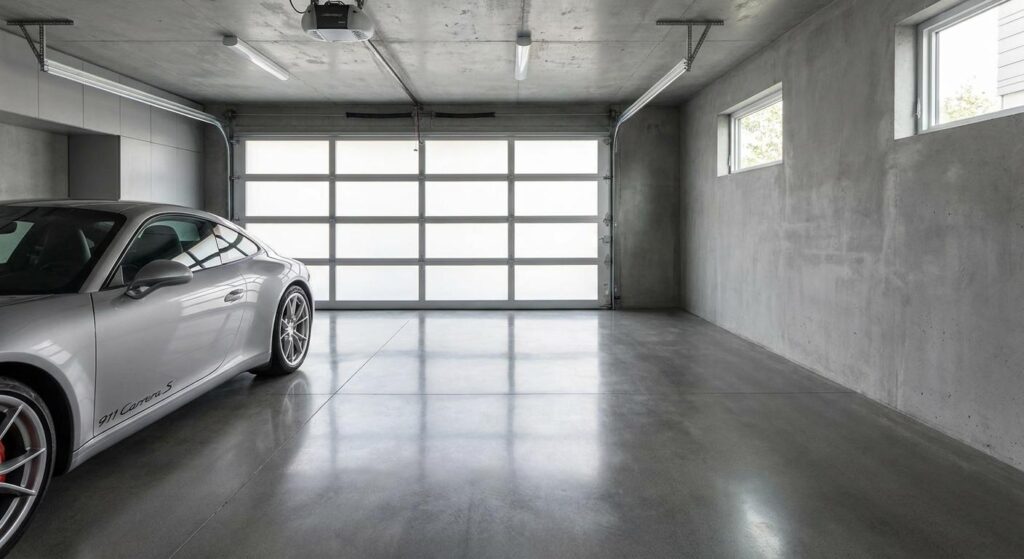
Polishing is a mechanical process, not a product you brush on. Installers grind the bare slab with progressively finer diamond tooling, apply a chemical densifier that hardens the surface, and refine it to anything from a satin to a mirror sheen. The result is the original concrete, made harder and easier to clean, with no separate film on top. Because nothing is added, a polished floor can’t peel or delaminate the way a poorly bonded coating can. It also keeps the raw, industrial look some homeowners love. But that same bare surface is exactly where the tradeoffs start once you park a car on it.
Where Polished Concrete Falls Short in a Garage
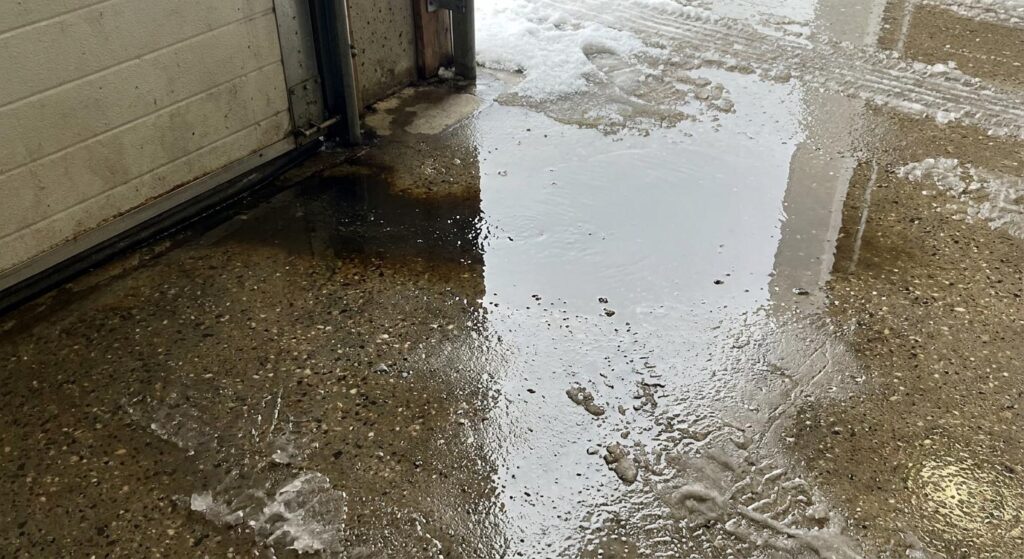
The honest drawbacks show up under real garage conditions, which is why A1’s garage floor coatings outsell polishing for most home garages. Polished concrete gets slick when it is wet, and a Northern Illinois garage stays wet for months as snow melts off the car. The surface is still porous enough that oil, brake fluid, and road salt can stain or etch it if a spill sits too long. Polishing also can’t hide cracks, patches, or discoloration—it highlights them. And it only works on a sound, well-finished slab; a rough or damaged garage floor isn’t a good candidate. None of these rule it out, but they explain why it isn’t the automatic best pick.
When a Coating Is the Better Garage Floor
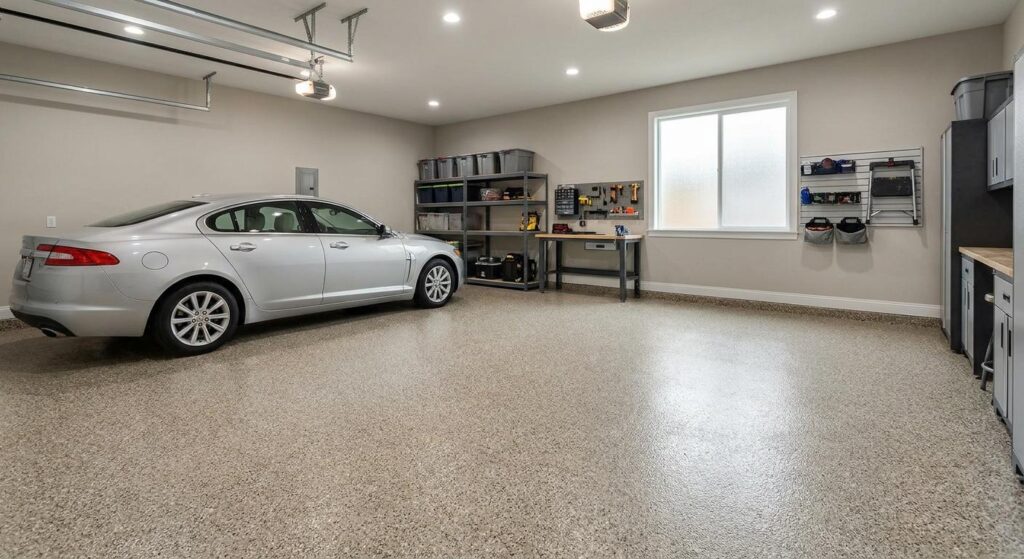
For the way most people use a garage, a coating solves the problems polishing leaves open. A flake or metallic epoxy system seals the slab completely, so oil and salt can be easily wiped off instead of soaking in. The textured flake surface adds grip underfoot, and the color blend hides the minor cracks and patches that polishing would put on display. You also get to choose the look rather than living with whatever the bare slab gives you.
Cost is closer than people expect. The price of polished concrete and a quality coating often land in the same range, so the decision usually comes down to performance rather than cost.
Frequently Asked Questions
Is a polished concrete garage floor slippery?
A polished concrete garage floor can be slippery when wet, which is a real consideration in a garage that sees melting snow and tracked-in water. The smooth, sealed surface offers less traction than a textured flake coating, though a grit additive in the final sealer can improve grip. For wet, high-traffic garages, many homeowners choose a coating with built-in texture instead.
Is polished concrete cheaper than epoxy for a garage?
Polished concrete is not always cheaper than epoxy for a garage, because both depend heavily on slab condition and the level of finish you want. A basic polish can undercut a premium coating, but a high-sheen polish on a slab that needs repair can cost as much or more. The better comparison is durability and protection for your specific garage, not sticker price alone.
Can any garage floor be polished?
No, not every slab is a good candidate for polishing. The process requires structurally sound, reasonably level concrete with enough surface integrity to be mechanically refined. For example, when inspecting older properties in Naperville, we frequently find concrete that is too heavily spalled, soft, or cracked to accept a quality polish. In those scenarios, a multi-layer coating is the superior remedy because it bridges, hides, and protects those structural flaws.
Decide What Your Garage Floor Really Needs
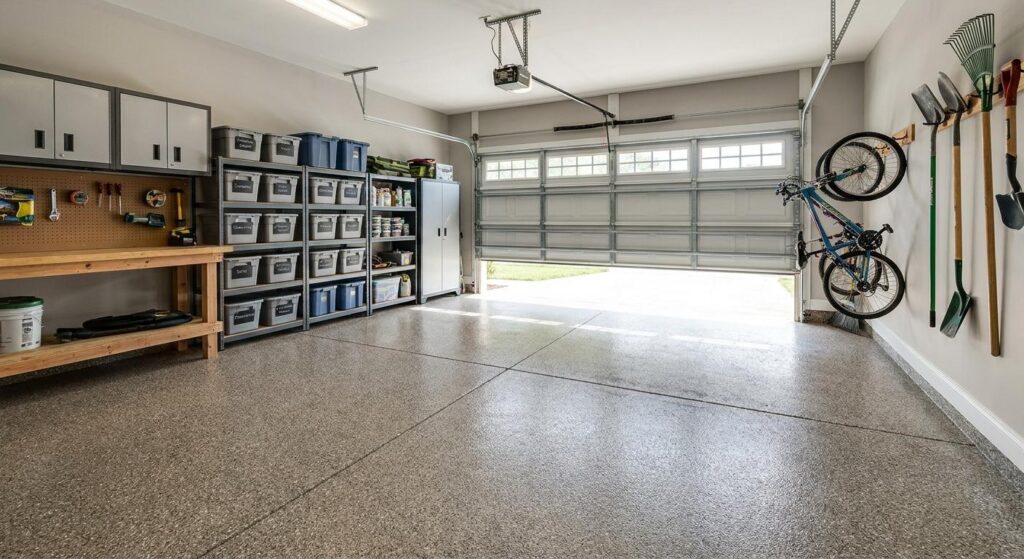
At the end of the day, polished concrete is a fantastic flooring option—it just isn’t a one-size-fits-all solution for a hardworking garage. If your slab is in great shape, you love the raw industrial look, and you aren’t worried about wet winter traction, polishing is a solid choice. However, if you want total protection against oil stains, dependable slip resistance during unpredictable Illinois weather, and a beautiful finish that permanently hides ugly cracks, a multi-layer coating is the smarter investment.
Contact A1 Concrete Coatings today or call (866) 212-6284 for a garage floor built for real-world wear and tear.

Under the direction of founder Luis Contreras, A1 Concrete Coatings provides various types of concrete coatings, including flake floors, solid concrete dyes, polished concrete floors, metallic epoxy floors, quartz epoxy floors, and urethane cement-coated floors. Louis and Angie Contreras built A1 Concrete Coatings from the ground up. Louis runs every job: handling estimates, leading installs, and ensuring each floor meets the standards the company was built on.