Quartz epoxy floor systems combine epoxy resin with broadcast quartz aggregate to create a dense, slip-resistant surface built for heavy commercial traffic. A1 Concrete Coatings installs commercial quartz epoxy flooring across Northern Illinois, where daily abrasion and constant wash-downs strip ordinary coatings within a year or two.
After coating hundreds of commercial floors, we’ve learned that the floors that fail first aren’t the ones carrying the most weight. They’re the ones that meet hot grease, dropped pans, and a nightly pressure washer. Standard epoxy chips and peels under that punishment, while a quartz-filled system grips and holds. Quartz earns its place by handling a commercial kitchen’s worst conditions, and the sections ahead show exactly where and why.
What Makes Quartz Epoxy Flooring Different?
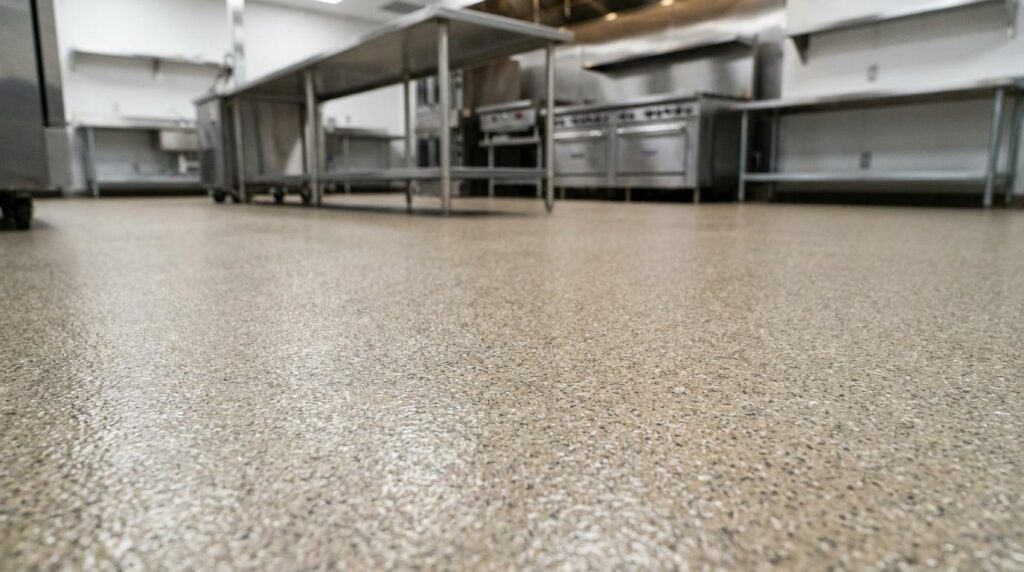
Quartz epoxy flooring isn’t just epoxy with a tint. Installers broadcast graded quartz sand into a resin base coat, then lock it down with clear topcoats, building a surface several times thicker and harder than a roll-on epoxy. The quartz does two jobs at once: it adds compressive strength so the floor shrugs off dropped tools and pallet traffic, and its texture creates natural slip resistance even when the surface is wet.
That combination is why quartz holds up where a thin decorative coating scratches through to bare concrete. A1 builds these floors with commercial-grade Sherwin Williams and SurfKoat products, the same materials used in industrial plants rather than hardware-store kits.
Why Commercial Kitchens and Warehouses Choose Quartz
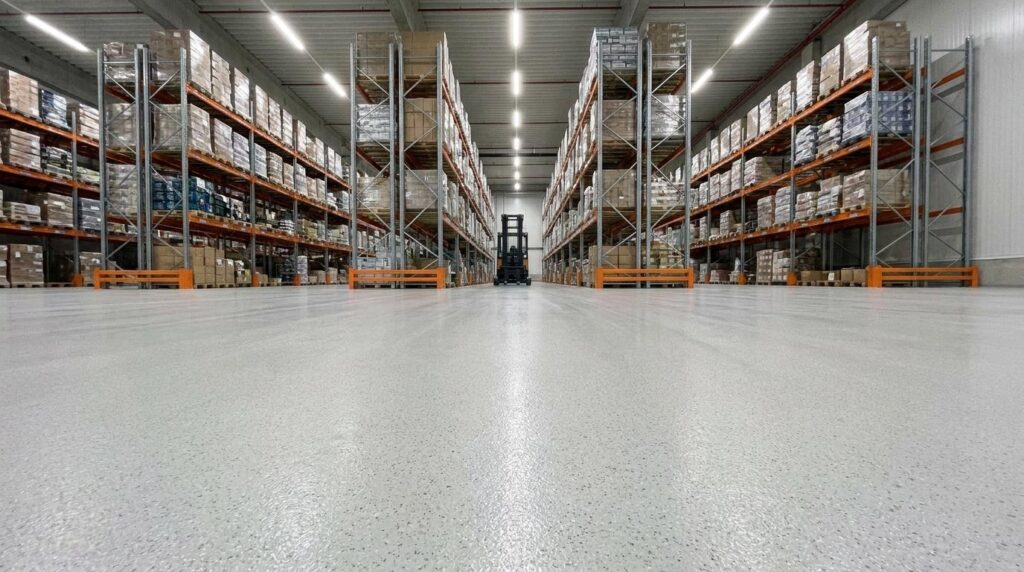
Commercial kitchens and warehouses put floors through abuse a residential garage never sees, which is the whole focus of A1’s commercial and industrial floor coatings. In a kitchen, the floor faces boiling spills, grease, and food acids between stations; in a warehouse, it takes forklift wheels, pallet jacks, and dropped freight all day. Quartz epoxy answers both because its sealed, non-porous surface wipes clean and meets the sanitation standards health inspectors look for.
- Slip resistance that holds up under water, grease, and nightly wash-downs
- A seamless, non-porous surface with no grout lines for bacteria to collect
- Chemical and abrasion resistance that survives daily cleaning agents
- Fast cure times that let A1 finish most floors without closing you for a week
For the most extreme food-processing environments, A1 also installs urethane cement flooring, a heavier-duty system built to handle steam and temperature swings without cracking. Quartz epoxy covers most commercial kitchens and warehouses, while urethane cement steps in when heat and moisture never let up.
Quartz Epoxy Cost and Installation in Northern Illinois
Budgeting for a quartz epoxy floor starts with square footage and the condition of your existing slab. In the Chicago market, commercial quartz epoxy systems generally run about $12 to $18 per square foot installed, with heavy-duty chemical-resistant builds landing higher.
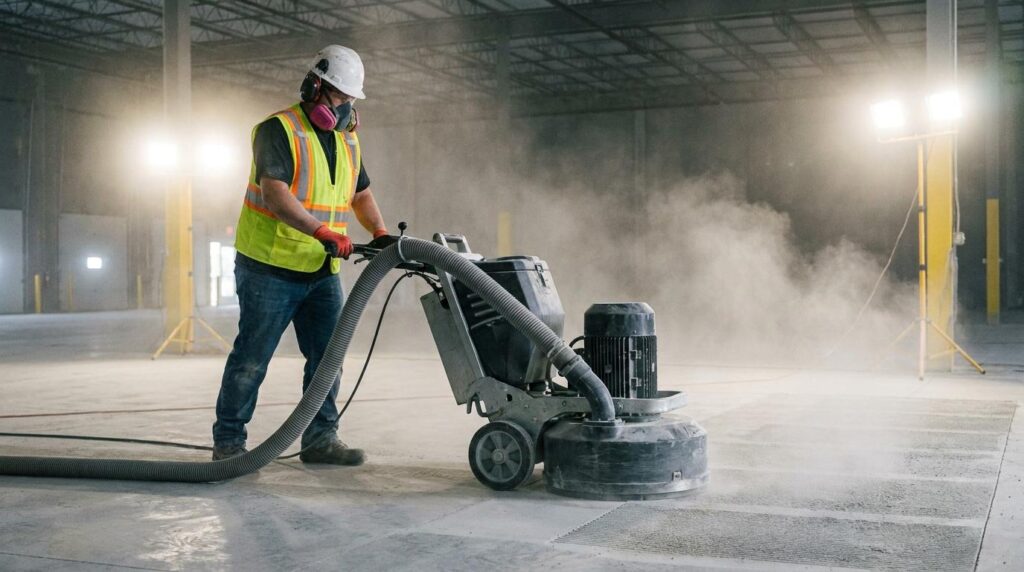
Prep drives much of that number: A1 diamond-grinds the slab, repairs cracks, and addresses moisture before the first coat goes down, because a quartz floor is only as durable as its bond to the concrete underneath.
Most commercial installs are scheduled around your operation, and the finished floor carries A1’s lifetime product warranty plus a one-year installation warranty against workmanship defects. Homeowners who want similar durability at home tend to choose A1’s polyurea flake garage floor systems instead, since quartz is built for commercial loads.
Frequently Asked Questions
Is quartz epoxy flooring durable enough for a busy commercial kitchen?
Quartz epoxy flooring is durable enough for a busy commercial kitchen because the broadcast quartz aggregate gives it far more impact and abrasion resistance than a standard epoxy coating. The sealed, non-porous surface resists grease, food acids, and hot spills while staying slip-resistant when wet. With proper slab prep, a professionally installed quartz floor holds up through many years of daily service.
How much does a quartz epoxy floor cost for a commercial space?
A quartz epoxy floor typically costs about $12 to $18 per square foot installed in the Chicago area, with the final price driven by slab condition, square footage, and chemical-resistance requirements. Heavier-duty builds for food processing run higher. A1 Concrete Coatings gives commercial clients a real number up front rather than requiring a drawn-out consultation first.
Can quartz epoxy be installed without shutting down our facility for days?
Yes, in most cases quartz epoxy goes down without shutting your facility for days, because A1 schedules around your operation and uses fast-curing commercial-grade products. That flexibility matters for the busy commercial kitchens and warehouses around Schaumburg and the Northwest suburbs, where even a short closure means lost revenue. The exact schedule depends on square footage and how much slab repair is needed.
Bring Commercial-Grade Durability to Your Facility Floor
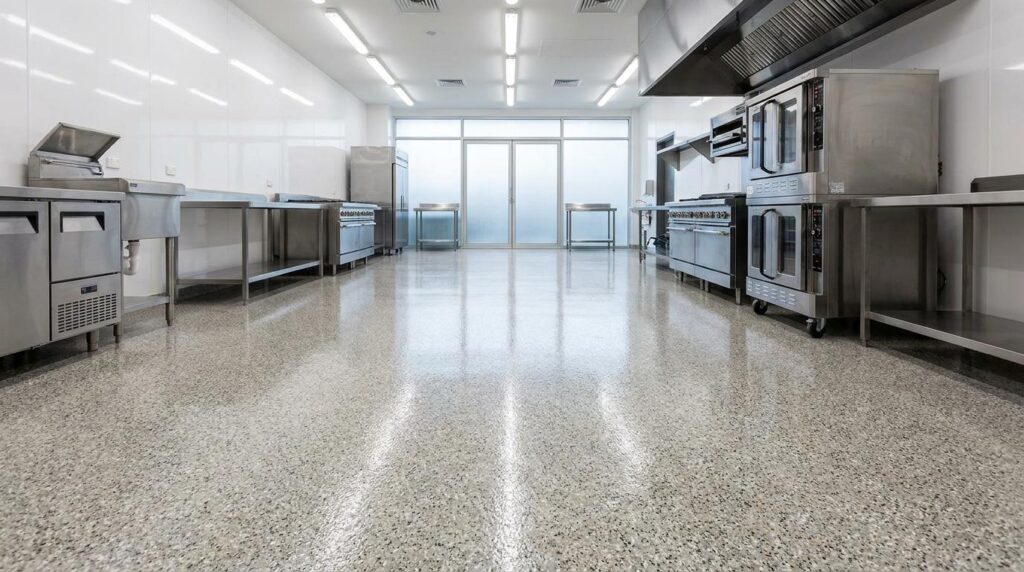
Choosing a commercial floor comes means matching the system to the punishment it will take. Quartz epoxy is the right call for most commercial kitchens, warehouses, and locker rooms that need slip- and impact-resistance, while urethane cement withstsands the harshest thermal-shock and wash-down environments. Both are applied with commercial-grade materials and A1’s lifetime product warranty, based on a schedule that keeps your business running.
To get a real quote for your space, contact A1 Concrete Coatings or call (866) 212-6284 to talk through the right system.

Under the direction of founder Luis Contreras, A1 Concrete Coatings provides various types of concrete coatings, including flake floors, solid concrete dyes, polished concrete floors, metallic epoxy floors, quartz epoxy floors, and urethane cement-coated floors. Louis and Angie Contreras built A1 Concrete Coatings from the ground up. Louis runs every job: handling estimates, leading installs, and ensuring each floor meets the standards the company was built on.