Professional epoxy garage floors typically last five to ten years in residential settings with proper installation and surface prep. DIY epoxy kits typically fail within one to two years. Polyaspartic systems (often paired with a polyurea base) typically last 15 years or longer under the same conditions. After installing countless garage floor coatings across Northern Illinois, A1 Concrete Coatings knows which systems hold up to a hard winter.
Spring is when Illinois homeowners notice their garage floor coatings have failed. Five months of road salt, freeze-thaw cycles, and wet tires expose every weak spot in the system. Peeling edges, yellowed patches near the garage door, and lifted sections under the parking spots all surface after a hard winter. If your floor was installed with the wrong materials or without proper prep, spring reveals it. Knowing how long each coating type actually lasts helps you pick a system that earns its cost over the years instead of failing after a few bad winters.
Epoxy Lifespan by Coating Type
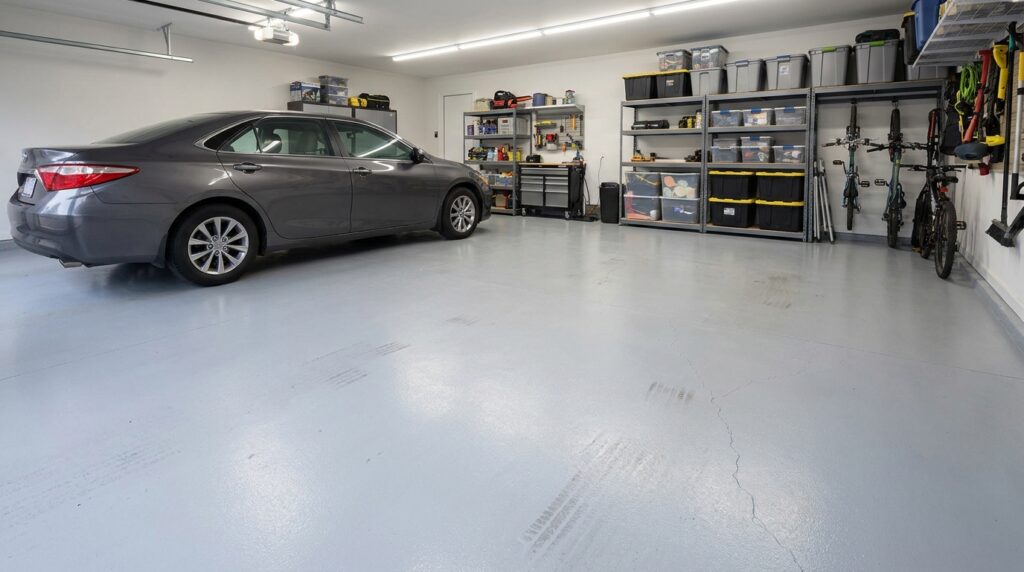
Not all epoxy systems age the same way. The type of product and how it’s applied determine how many years you’ll get before the floor needs work.
- Water-based epoxy (DIY kits): 1 to 2 years. These products sit on the surface without bonding deeply. They tend to peel, chip, and yellow quickly.
- Solvent-based and solid epoxy (professional): 5 to 7 years. Better adhesion and thickness, but still vulnerable to UV degradation and hot-tire pickup.
- Flake and metallic epoxy (professional): 8 to 12 years. The decorative flake layer adds abrasion resistance, and metallic systems use thicker application profiles.
- Polyaspartic and polyurea systems: 15 years or longer. UV-stable chemistry, flexible cure profile, and commercial-grade topcoats extend the lifespan well beyond any epoxy system.
A1 Concrete Coatings uses Sherwin Williams and SurfKoat commercial-grade materials. These industrial products perform at the top end of each lifespan range because the resin quality and pigment stability exceed what consumer-grade products deliver.
What Shortens an Epoxy Floor’s Life in Illinois
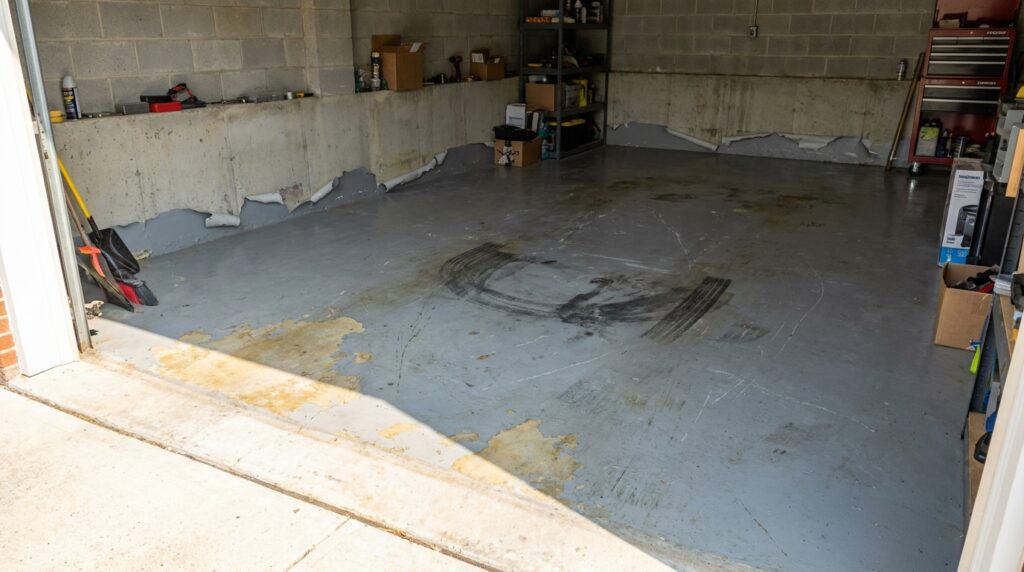
Illinois garages are harder on coatings than garages in moderate climates. Three factors accelerate wear:
Poor Surface Preparation
This is the number one cause of early failure. If the concrete isn’t properly diamond-ground before coating, the epoxy bonds to surface dust and contaminants instead of the slab itself. A poorly prepped floor can peel within months, regardless of what product was used. We’ve seen this pattern repeat in Buffalo Grove, Deerfield, and other Chicagoland garages where the previous contractor skipped grinding to save time.
Road Salt and Chemical Exposure
Salt and de-icer tracked in on tires sit on the coating surface and attack the resin. Regular sweeping and occasional wet mopping remove these contaminants before they cause damage. Letting salt sit for weeks accelerates breakdown.
UV Exposure Through Garage Windows
Sunlight coming through garage door windows typically causes standard epoxy to yellow within one to two years. Polyaspartic coatings resist UV degradation, which is why they hold color and gloss years longer than epoxy in the same garage.
Maintenance That Extends Your Floor’s Lifespan
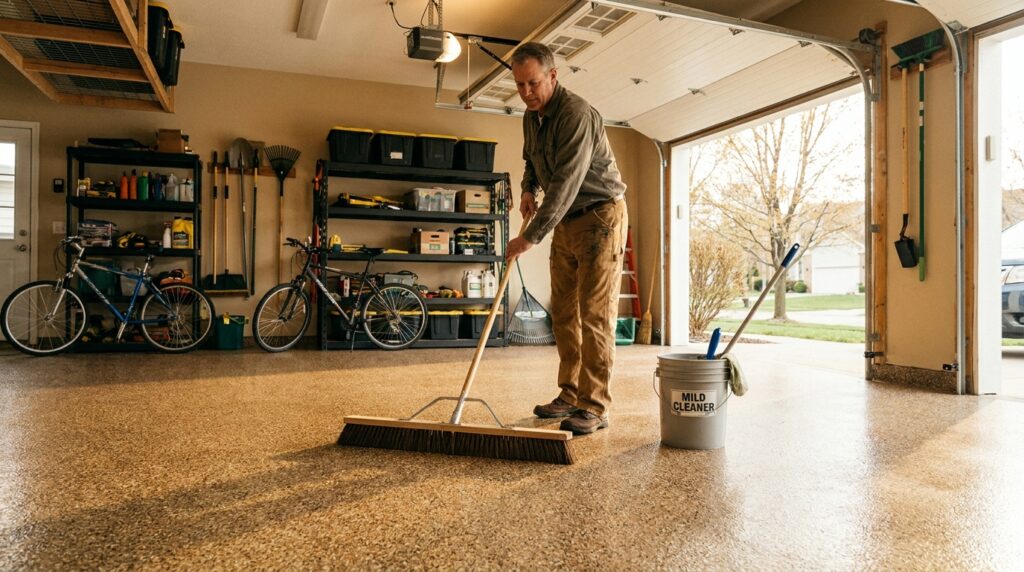
A coated garage floor doesn’t need much maintenance, but the basics add years:
- Sweep weekly to remove grit and salt that scratch the surface.
- Mop monthly with a pH-neutral cleaner and warm water. Avoid ammonia-based or citrus cleaners that can dull the topcoat.
- Wipe up oil, gasoline, and chemical spills within 24 hours.
- Place mats under vehicle drip zones during winter to catch salt and moisture runoff.
For a detailed breakdown on the longevity of garage floor coatings, see our polyurea vs. epoxy guide on which coating lasts longer in illinois.
Frequently Asked Questions
Does epoxy flooring add value to a home?
A professionally coated garage floor improves the appearance and functionality of the space, which buyers notice during showings. While there’s no fixed dollar amount it adds to resale value, a clean, well-maintained garage floor signals that the home has been cared for.
When should I recoat my epoxy garage floor?
Recoat when you see persistent peeling, widespread yellowing, or sections where the concrete is exposed through the coating. A1 Concrete Coatings recommends recoating at the first sign of adhesion failure rather than waiting for the entire floor to degrade, since prep costs increase as more coating needs to be removed.
Is polyaspartic really worth the extra cost over epoxy?
For Illinois garages, yes. Polyaspartic lasts roughly twice as long as standard epoxy, resists UV yellowing, and cures in hours instead of days. Over a 15-year window, one polyaspartic install typically costs less than two epoxy cycles when you factor in labor and prep for the second application.
Keep Your Garage Floor Performing for Years
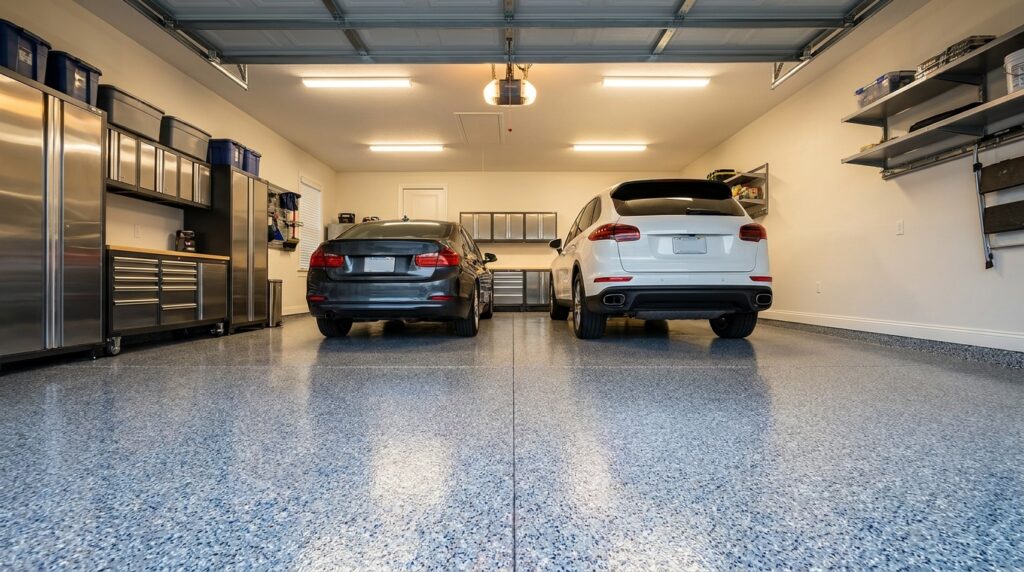
How long your garage floor lasts depends on what was applied, how the concrete was prepped, and what you do after installation. Standard epoxy gives you five to ten solid years with basic care. Polyaspartic doubles that timeline and shrugs off the UV, salt, and temperature extremes that wear epoxy down.
Contact A1 Concrete Coatings at (866) 212-6284 for a free assessment of your current garage floor. We’ll tell you what condition it’s in and whether a recoat, new coating, or upgrade makes the most sense.

Under the direction of founder Luis Contreras, A1 Concrete Coatings provides various types of concrete coatings, including flake floors, solid concrete dyes, polished concrete floors, metallic epoxy floors, quartz epoxy floors, and urethane cement-coated floors. Louis and Angie Contreras built A1 Concrete Coatings from the ground up. Louis runs every job: handling estimates, leading installs, and ensuring each floor meets the standards the company was built on.