Epoxy flooring pros and cons come down to a simple tradeoff: you get a durable, chemical-resistant surface at $3 to $7 per square foot, but you also get a coating that yellows under UV light, takes days to cure, and can peel if the concrete wasn’t properly prepped. A1 Concrete Coatings installs epoxy and polyaspartic systems across Illinois and helps homeowners weigh these tradeoffs honestly.
You pull into the garage on a February evening, tires caked with road salt and slush, and park on a floor that was coated last summer. By April, the coating has yellow streaks where sunlight hits it through the garage door windows, and the edges near the door are starting to lift. That’s standard epoxy doing exactly what its chemistry allows. Knowing these limits before you buy saves you from a second coating job two years later.
Advantages of Epoxy Garage Floor Coatings
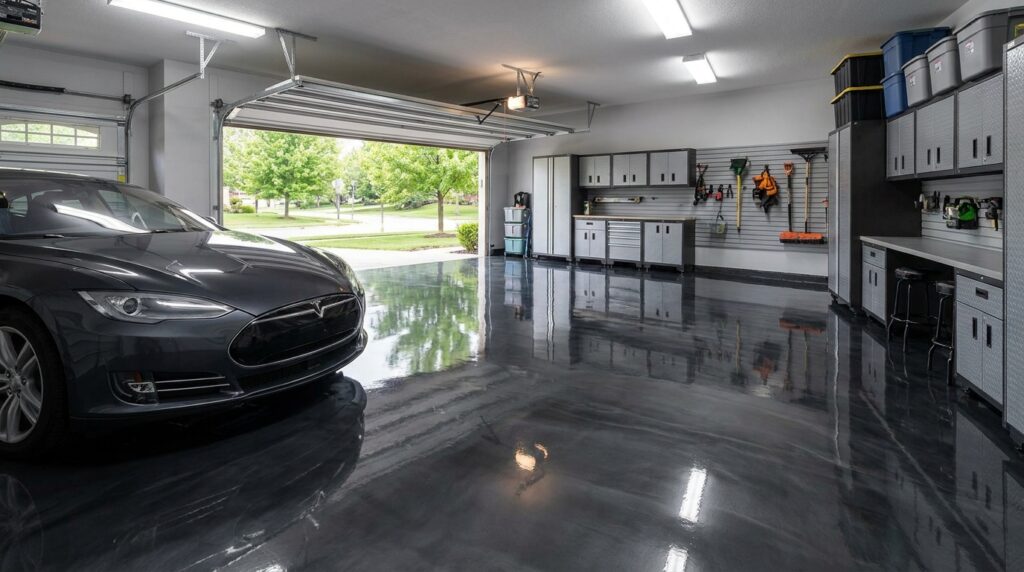
Professional epoxy coatings do several things well, and they’ve earned their reputation for good reason.
Strong Chemical and Impact Resistance
Cured epoxy shrugs off oil, gasoline, brake fluid, and most household chemicals. It resists impact from dropped tools and heavy equipment better than bare concrete or paint. For a garage that doubles as a workshop, that protection matters.
Attractive, Glossy Finish
Metallic epoxy especially creates stunning one-of-a-kind 3D patterns. Standard solid-color and flake epoxy systems transform a plain gray slab into a finished surface that looks like a showroom floor.
Lower Upfront Cost
At $3 to $7 per square foot for professional installation, epoxy is one of the most affordable coating options. A standard two-car garage costs $1,600 to $3,800 with a solid epoxy system. For homeowners on a tight budget, the entry price is hard to beat.
Drawbacks Homeowners Overlook
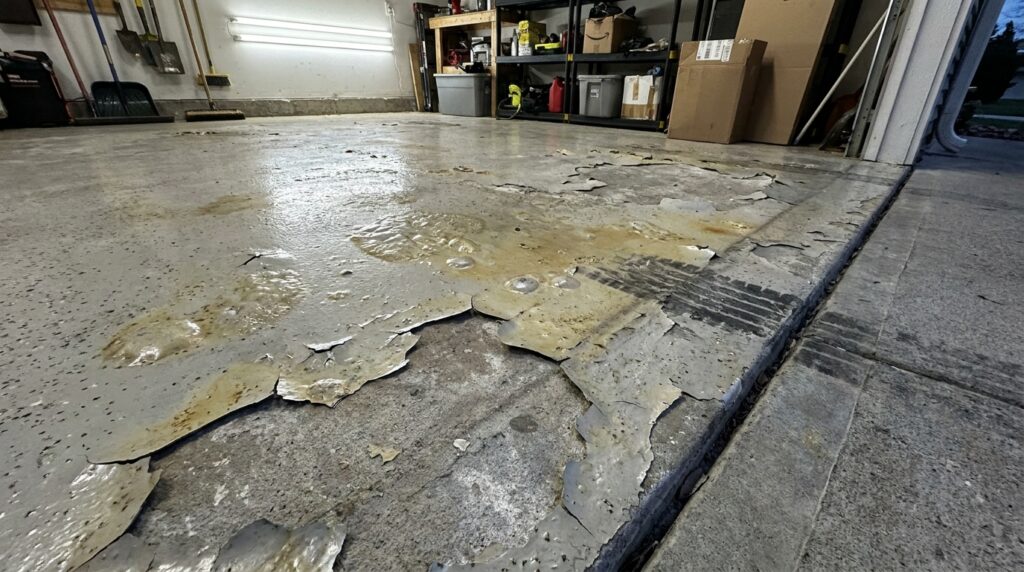
The problems with epoxy aren’t visible on installation day. They show up six months to two years later, and most homeowners don’t find out until the damage is done.
UV Yellowing
Standard epoxy tends to yellow when exposed to sunlight. If your garage door lets in natural light, the sections nearest the opening will discolor within one to two years. There’s no repair short of recoating.
Long Cure Time
Epoxy needs two to three days of cure time before you can walk on it and up to seven days before parking on it. During a Chicago winter, that means leaving your car outside for a week or timing the project around a warm stretch.
Hot-Tire Pickup
When hot tires park on epoxy, the heat can soften the coating, and the tire may bond to the surface. When you drive away, patches of the coating can pull off with the tire. This is one of the most common epoxy failures in residential garages, particularly in Bannockburn and other North Shore communities where homeowners park multiple vehicles daily on the same coating.
When Polyaspartic Outperforms Epoxy
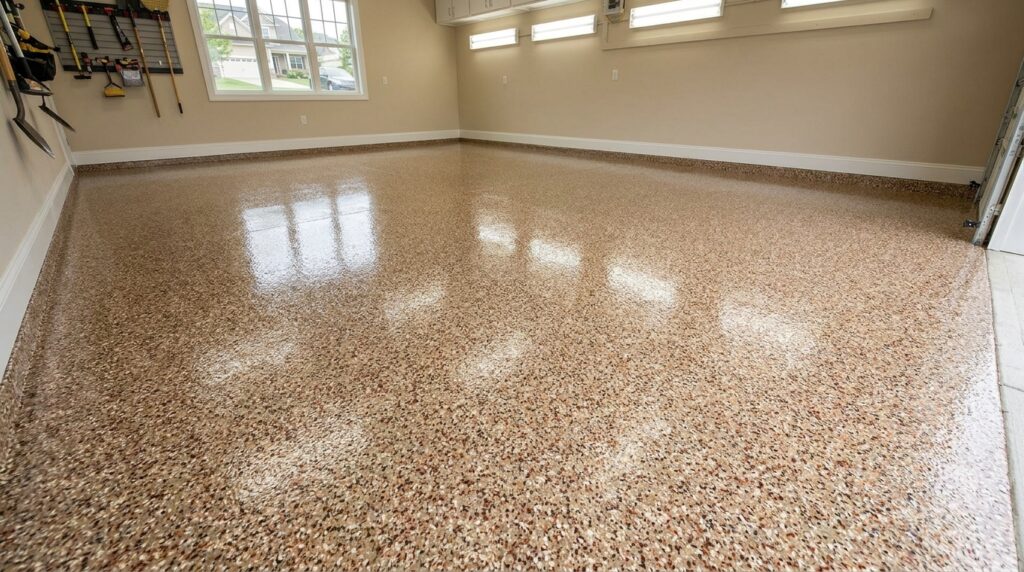
Polyaspartic and polyurea coatings solve epoxy’s three biggest weaknesses. The chemistry is UV-stable, so it won’t yellow. It cures in hours instead of days, allowing same-day vehicle parking. And it resists hot-tire pickup because the coating stays rigid at higher temperatures.
Polyaspartic costs $5 to $12 per square foot installed, which is more than epoxy upfront. Over 15 years, though, a single polyaspartic install typically costs less than two epoxy cycles. A1 Concrete Coatings uses commercial-grade Sherwin Williams and SurfKoat materials for both systems. For Illinois garages that face road salt, freeze-thaw cycles, and UV exposure through garage windows, polyaspartic delivers better long-term value. You can learn about their recommended applications with our polyurea and polyaspartic floor coatings guide.
Frequently Asked Questions
Is epoxy flooring worth it for a garage?
Epoxy is worth it for homeowners who want an affordable coating and can accept a five-to-ten-year lifespan with potential yellowing. If you want a floor that handles UV exposure and hot tires without degrading, polyaspartic or polyurea systems deliver more durability for a moderate price increase.
How long does epoxy flooring last in Illinois?
Professional epoxy typically lasts five to ten years in a residential garage with moderate traffic. A1 Concrete Coatings has seen well-prepped epoxy floors hold up for a decade when the homeowner keeps road salt swept and chemicals wiped up promptly. DIY kits typically fail within one to two years.
Can you apply epoxy in cold weather?
Traditional epoxy requires temperatures above 50 degrees for proper curing, which limits installation to warmer months in Northern Illinois. Polyaspartic systems cure in much colder conditions, making them the better option for winter installations when your garage can’t be heated.
Make the Right Coating Decision for Your Garage
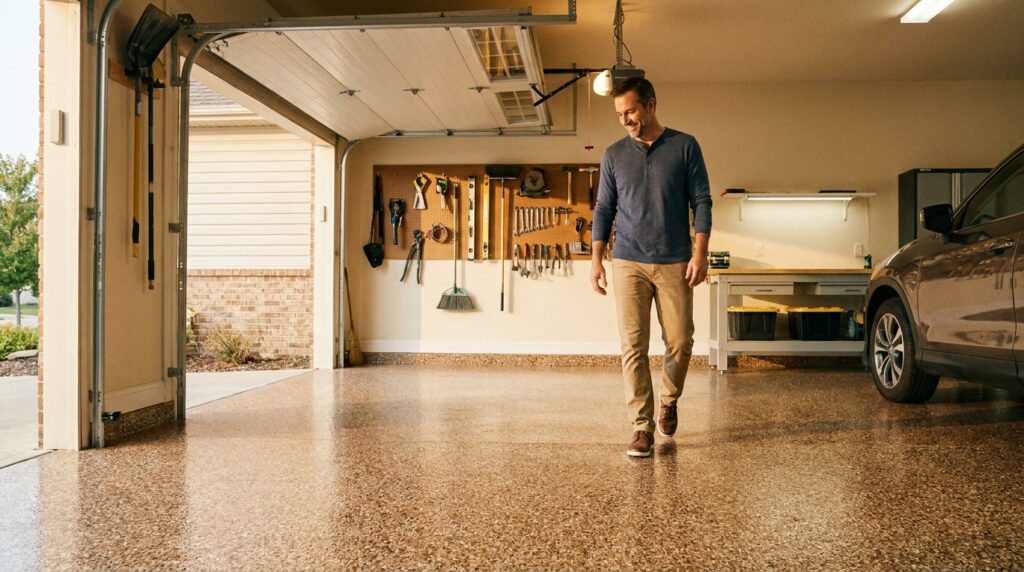
Epoxy does what it’s designed to do: protect concrete at an affordable price. The problems start when homeowners expect it to perform like a premium system. If your garage stays dark and the floor sees light traffic, epoxy holds up fine. If sunlight hits the floor, you park daily, and you need a coating that survives Chicago winters without degrading, polyaspartic is the better investment.
Contact A1 Concrete Coatings at (866) 212-6284 for a free estimate. We’ll walk through both options and help you pick the system that fits your garage and budget.

Under the direction of founder Luis Contreras, A1 Concrete Coatings provides various types of concrete coatings, including flake floors, solid concrete dyes, polished concrete floors, metallic epoxy floors, quartz epoxy floors, and urethane cement-coated floors. Louis and Angie Contreras built A1 Concrete Coatings from the ground up. Louis runs every job: handling estimates, leading installs, and ensuring each floor meets the standards the company was built on.