Polished concrete vs epoxy floors differ in appearance, durability, cost, and maintenance. Polished concrete costs $3 to $8 per square foot and creates a sleek, low-maintenance surface. Epoxy coatings cost $3 to $12 per square foot and offer more color and design options. A1 Concrete Coatings provides both options for Northern Illinois homeowners and commercial properties.
Most homeowners assume polished concrete is just a cheaper version of an epoxy coating. It’s actually a completely different process. One grinds and refines the existing slab while the other applies a new material on top. That distinction changes everything, including how they perform, what they cost over the long term, and the spaces they’re suited to.
How Each Floor System Works
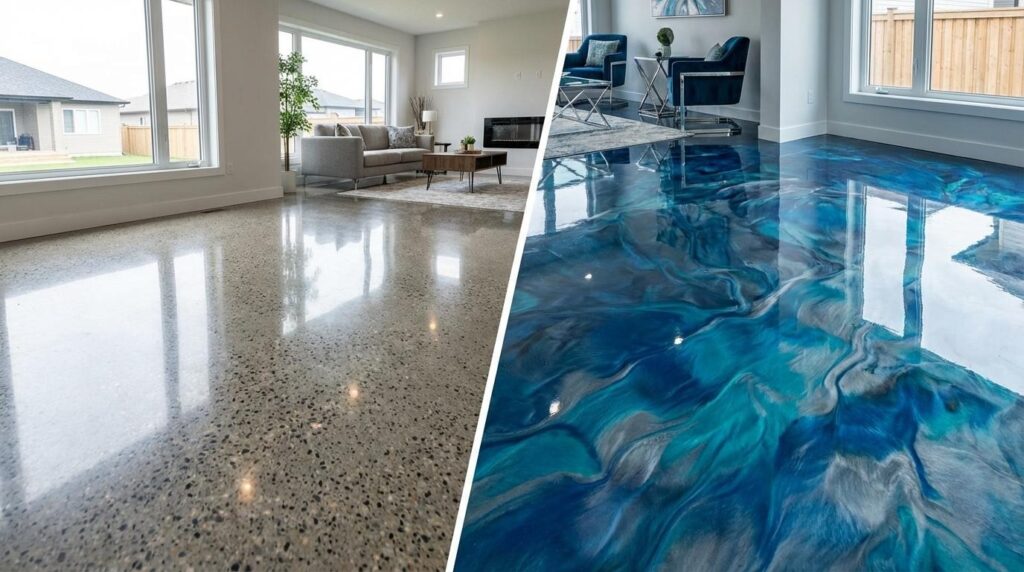
Knowing the mechanical differences between these two systems is the first step in choosing the right flooring for your property.
Polished Concrete: Multi-Step Grinding
Diamond abrasives progressively refine the existing concrete slab from coarse to fine, eventually producing a smooth, reflective surface. A densifier (a chemical hardener) is applied between grinding stages to strengthen the surface. The result is the concrete itself, polished to a matte or high-gloss finish. No coating is added on top.
Epoxy: Two-Part Resin System
Epoxy flooring works differently. A two-part resin system is mixed and applied over prepared concrete, creating a new surface layer. Metallic epoxy uses mica pigments for 3D visual effects. Flake systems use polyurea or polyaspartic bases with decorative vinyl chips. Both build a distinct coating layer that sits above the concrete.
Polished concrete reveals the slab’s natural character, including aggregate and color variation. Epoxy covers the slab entirely, creating a uniform or decorative finish.
Performance, Cost, and Maintenance Side by Side
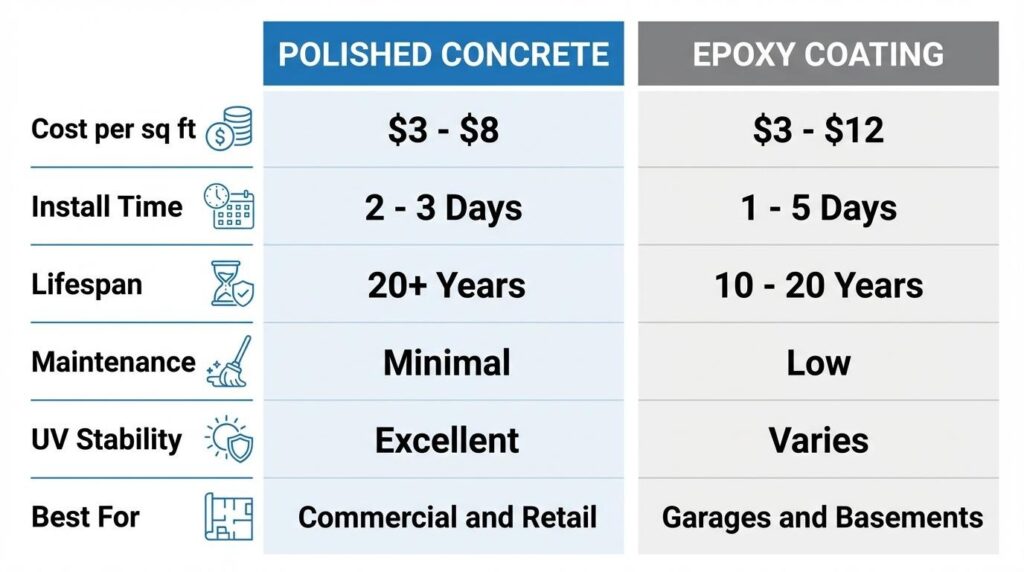
Cost varies by project scope and floor condition. Polished concrete in Northern Illinois runs $3 to $8 per square foot, depending on the gloss level and whether decorative dyes are added. Basic grinding with a matte finish sits at the lower end. High-gloss polishing with stain colors approaches the higher range.
Epoxy coatings range from $3 to $12 per square foot installed. A polyurea flake system for a standard two-car garage typically falls between $1,800 and $3,500. Metallic epoxy, with its custom 3D effects, can push past $6,000.
Maintenance requirements differ in kind, not difficulty. Polished concrete needs periodic re-densifying (every few years in commercial settings) and regular dust mopping. Epoxy coatings need only sweeping and occasional mopping with a pH-neutral cleaner.
Which Floor Fits Which Space
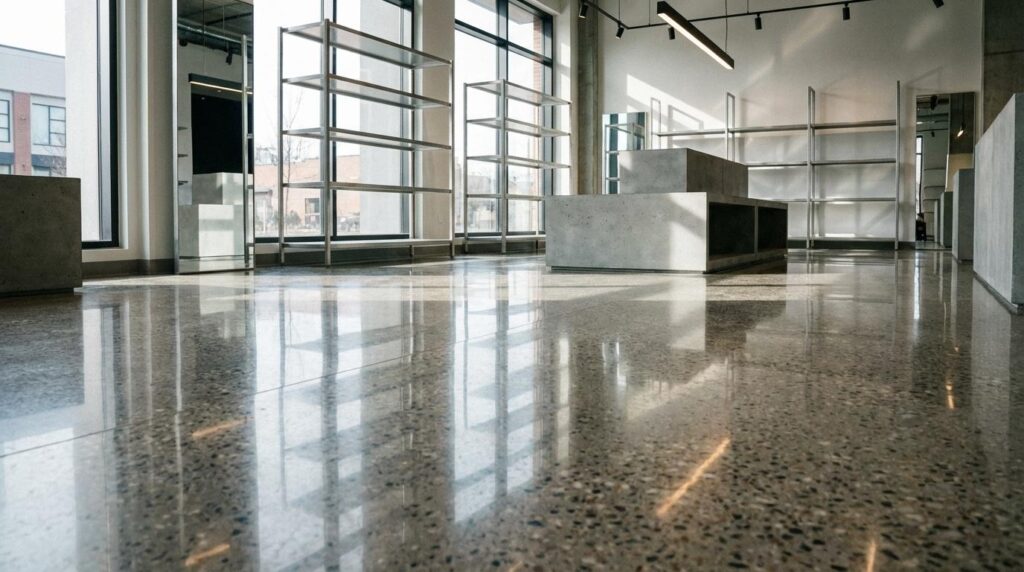
Polished concrete excels in commercial retail, showrooms, and open-concept basements where a modern, minimalist look fits the design. It handles heavy foot traffic well and resists peeling and delamination because there’s no coating to separate from the slab. However, polished concrete doesn’t hide cracks, stains, or patches in damaged slabs — what’s in the concrete shows through.
Epoxy and polyurea coatings work better for garages, basements with moisture concerns, and spaces where you want to cover existing concrete imperfections. The coating layer creates a seamless barrier against moisture vapor, road salt, and chemical spills. For Illinois garages specifically, polyurea flake systems handle freeze-thaw cycling better than either polished concrete or traditional epoxy.
A1 Concrete Coatings offers both polished concrete and coating systems, so the recommendation is based on your floor’s condition and how you use the space, not on which is more profitable to install.
Frequently Asked Questions
Is polished concrete cheaper than epoxy in Illinois?
At the lower end, polished concrete and epoxy start around the same price per square foot ($3). The total project cost depends on the slab condition, square footage, and finish level. A basic polished floor in good condition costs less than a metallic epoxy system but is comparable to a polyurea flake installation.
Can you polish a garage floor in Northern Illinois?
Polished concrete works in garages but has limitations in Illinois climates. The surface lacks the chemical resistance and flexibility of a polyurea coating, making it more vulnerable to road salt damage and freeze-thaw stress. A1 Concrete Coatings typically recommends coatings over polishing for garage applications in this region.
How long does polished concrete last compared to epoxy?
Polished concrete is expected to perform for 20 years or more with proper maintenance because the surface is the slab itself, reducing the risk of peeling or delamination. Epoxy coatings carry manufacturer ratings of 10 to 20 years depending on material grade, with commercial-grade products from Sherwin Williams and SurfKoat at the higher end of that range.
Match the Floor to How You Use the Space
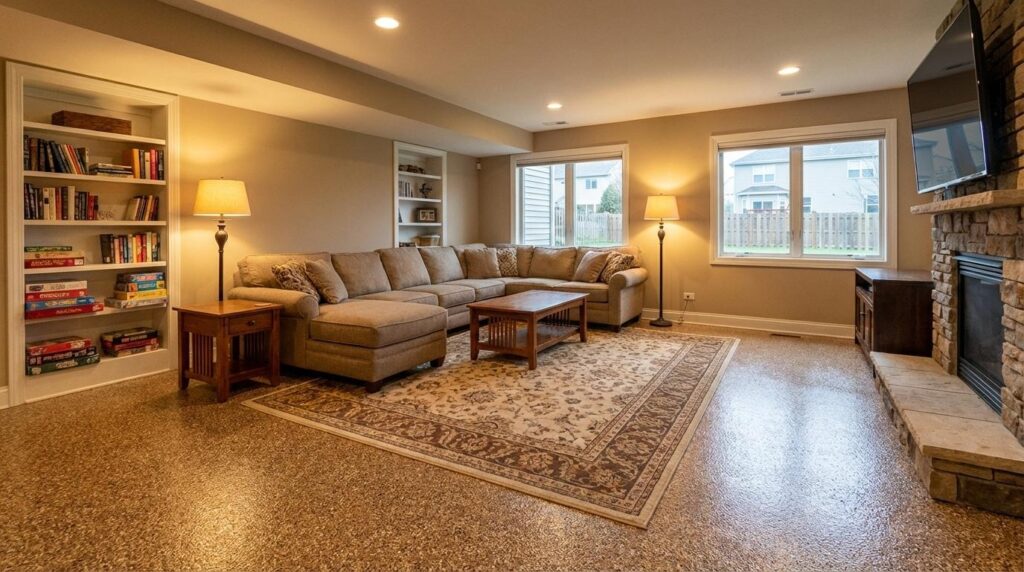
Polished concrete gives you a refined, industrial-modern look using the slab you already have. Epoxy and polyurea coatings give you a new surface with more design options and better protection against moisture and chemicals. Your decision should start with the room: garages and moisture-prone basements favor coatings, while retail spaces and dry interiors favor polishing.
Contact A1 Concrete Coatings for a free estimate on either system. We’ll assess your slab’s condition and recommend the option that makes the most sense for your space and budget.

Under the direction of founder Luis Contreras, A1 Concrete Coatings provides various types of concrete coatings, including flake floors, solid concrete dyes, polished concrete floors, metallic epoxy floors, quartz epoxy floors, and urethane cement-coated floors. Louis and Angie Contreras built A1 Concrete Coatings from the ground up. Louis runs every job: handling estimates, leading installs, and ensuring each floor meets the standards the company was built on.