The difference between polyurea vs epoxy garage floor coatings is their chemistry, cure time, and climate resistance. Polyurea floor systems typically outlast traditional epoxy in cold-weather durability and UV stability, while epoxy offers more decorative options at a lower upfront cost. Both protect concrete, but they handle Illinois winters, road salt, and temperature swings very differently.
A1 Concrete Coatings installs both systems across Northern Illinois and helps homeowners choose based on how they actually use their garage. Here are the differences between the two that matter.
How Polyurea and Epoxy Coatings Differ
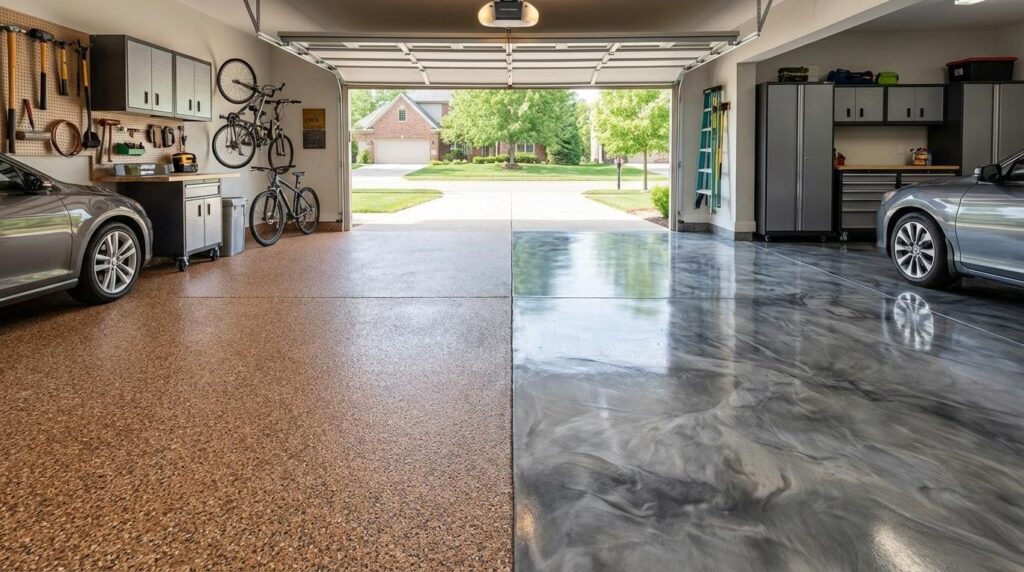
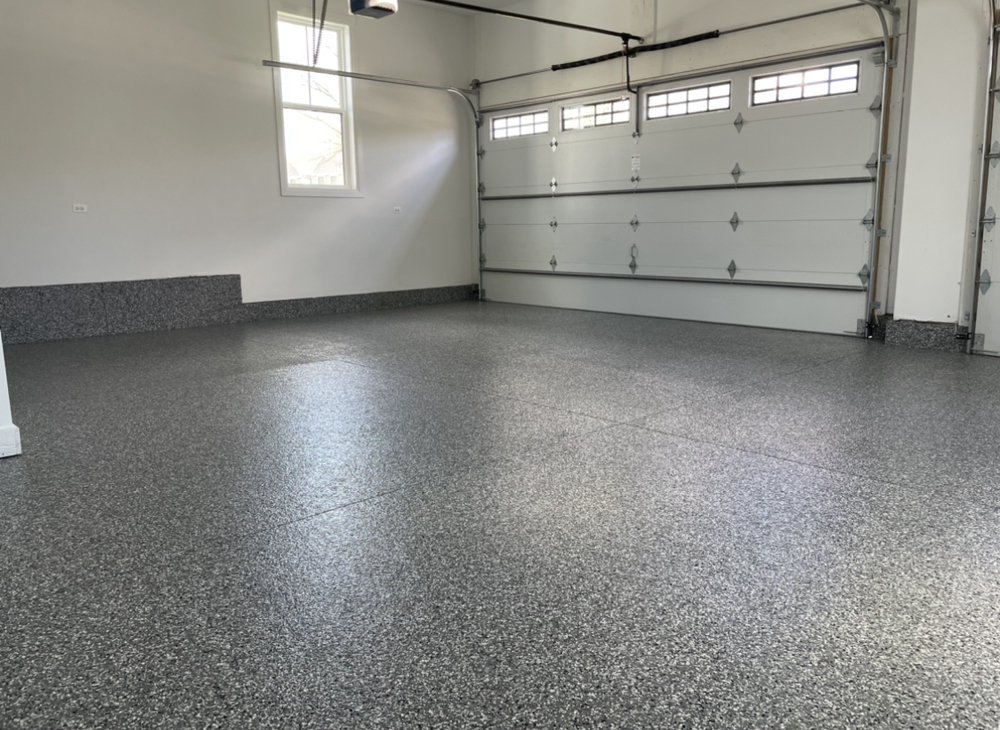
Polyurea is a flexible, fast-curing coating that bonds mechanically to concrete through diamond grinding. The system uses a polyaspartic base coat, decorative vinyl flakes, and a UV-stable clear topcoat. Most residential garage floors are finished in a single day.
Epoxy is a rigid, two-part system that hardens through a chemical reaction between resin and hardener. Metallic epoxy creates unique 3D visual effects using mica nano-particles, making it popular for showrooms and high-end residential garages. Cure time typically runs 3-5 days before full use.
The core difference is flexibility. Polyurea expands and contracts with concrete as temperatures shift. Epoxy doesn’t. It’s a harder, more rigid film that can crack when concrete moves beneath it.
Durability and Performance in Illinois Conditions
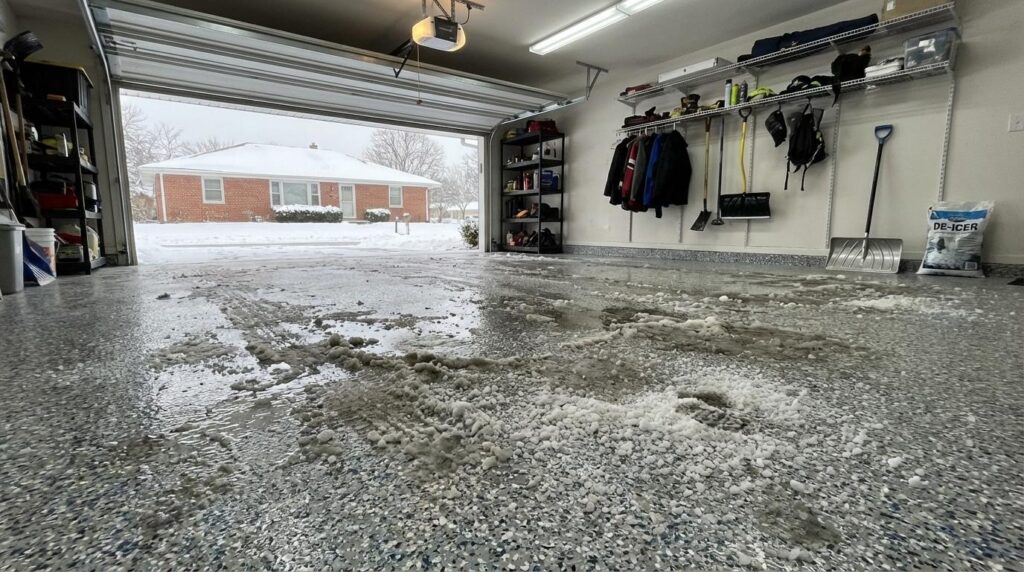
Northern Illinois puts garage floors through roughly 25-30 freeze-thaw cycles per winter. Road salt, de-icing chemicals, and standing snowmelt test any coating’s bond to the concrete below.
Flexibility and UV Stability
Polyurea’s flexibility gives it an edge in this environment. The coating moves with the slab rather than fighting it, reducing cracking and delamination. It’s also UV-stable, so it resists yellowing from sunlight hitting the garage entrance.
Thermal Cycling and Temperature Tolerance
Traditional epoxy is more vulnerable to thermal cycling. Its rigid structure doesn’t accommodate concrete expansion, and lower-grade epoxy systems (particularly DIY kits from hardware stores) often peel within one to two Chicago winters.
Professional-grade metallic epoxy from manufacturers like Sherwin-Williams and SurfKoat performs significantly better than retail products, but still can’t match polyurea’s temperature tolerance.
Hot Tire Pick-Up
Polyurea resists hot tire marks more effectively because its flexible topcoat doesn’t soften as much as rigid epoxy does under sustained heat.
Cost, Timeline, and Maintenance Compared
Understanding the financial and logistics requirements of each system helps homeowners have realistic expectations for their garage renovation projects.
Upfront Costs
For a standard two-car garage floor coating in the Chicago suburbs, polyurea flake systems typically cost $1,800 to $3,500 installed. Metallic epoxy runs $3,000 to $6,000+, depending on complexity and the chosen colors.
Installation Timelines
A polyurea flake floor can be ground, coated, and walkable within 24 hours in any season and any temperature. Epoxy requires 3 to 5 days of curing time, and most installers won’t apply it when temperatures drop below 50°F, which rules out roughly five months of the year in Illinois.
Maintenance Requirements
Both systems are low-maintenance: sweep regularly and mop with a mild cleaner. Polyurea’s seamless topcoat makes cleanup faster since there’s no texture that traps dirt.
A1 Concrete Coatings backs both systems with a lifetime product warranty on materials and a one-year installation warranty covering workmanship defects.
Frequently Asked Questions
Is polyurea better than epoxy for a garage floor in Illinois?
Polyurea handles Illinois freeze-thaw cycles, road salt, and temperature swings better than epoxy because of its flexible chemistry. For daily-use residential garages, A1 Concrete Coatings recommends polyurea flake systems for durability. Metallic epoxy is a better fit when visual impact matters more than cold-weather resilience.
Can you apply epoxy or polyurea in winter?
Polyurea and polyaspartic coatings cure in any temperature, making them installable year-round in Northern Illinois. Traditional epoxy requires temperatures above 50°F for proper curing, which limits installation to roughly April through October in the Chicago area.
How long does a polyurea garage floor coating last?
A professionally installed polyurea system with commercial-grade materials is designed to last 15 tp 20 years or more with normal maintenance. The coating is backed by a lifetime product warranty covering the materials themselves. Longevity depends on surface preparation quality and the grade of materials used.
Get the Right Coating for Your Illinois Garage
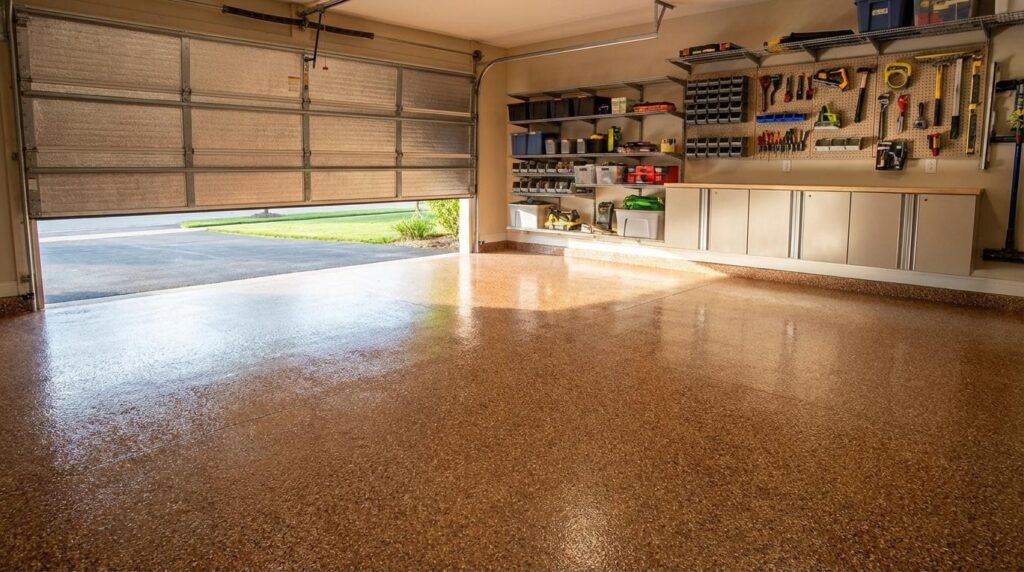
The choice between polyurea and epoxy depends on what you need most. If you want a floor that survives Chicago winters, installs in one day, and handles road salt without flinching, polyurea is the stronger option. If you want more decorative options at a lower upfront cost and your garage doesn’t take the brunt of road salt exposure, epoxy is a solid investment.
Either way, material grade matters more than coating type. Commercial-grade products from Sherwin-Williams and SurfKoat outperform any hardware store kit by years. Contact A1 Concrete Coatings today for a free estimate on your garage floor project.

Under the direction of founder Luis Contreras, A1 Concrete Coatings provides various types of concrete coatings, including flake floors, solid concrete dyes, polished concrete floors, metallic epoxy floors, quartz epoxy floors, and urethane cement-coated floors. Louis and Angie Contreras built A1 Concrete Coatings from the ground up. Louis runs every job: handling estimates, leading installs, and ensuring each floor meets the standards the company was built on.